Specialised nutrition: enabling health and wellbeing in all life stages

Nutritional needs evolve throughout life. Periods of rapid growth, illness, recovery, ageing or specific physiological conditions may increase nutritional requirements or limit the ability to consume or absorb ordinary foods.

Specialised nutrition encompasses foods that are specifically formulated to meet these particular nutritional needs, supporting health and wellbeing at all life stages – from infancy and early childhood to adulthood and older age – when normal diets alone may be insufficient.

Special dietary foods are defined and governed internationally through Codex Alimentarius, ensuring that they are safe, nutritionally appropriate and fit for their intended purpose.

Nutrition at different life stages

Infancy (0-11 months)

Infancy is characterised by rapid physical growth, neurological development and immune system maturation. Nutritional requirements are high relative to body size and must be precisely balanced. Key nutrients include energy, high‑quality protein, essential fatty acids (including DHA), iron, iodine, zinc and vitamins A, D and B‑complex. Nutritional risks include faltering growth, micronutrient deficiencies and feeding difficulties associated with prematurity, congenital conditions or illness.

Special dietary foods for this age group include:

Early childhood (12-35 months)

During early childhood, growth continues at a slower but still significant pace, while eating behaviours and dietary patterns begin to form. Nutritional needs remain high relative to body size, particularly for iron, calcium, iodine, vitamin D and essential fatty acids. Risks at this stage may include selective eating, nutrient inadequacies and, in some settings, both undernutrition and early overweight.

Special dietary foods for this age group include:

Childhood and adolescence (3-19 years)

This life stage encompasses steady growth, pubertal development and increased cognitive and physical demands. Nutritional requirements increase significantly during adolescence, particularly for energy, protein, iron, calcium and vitamin D. Nutritional risks include micronutrient deficiencies, disordered eating, overweight and obesity, and nutrition‑related complications of chronic disease.

Special dietary foods for this age group include:

Adulthood (20-59 years)

In adulthood, nutritional needs vary widely depending on lifestyle, health status, pregnancy or lactation, and levels of physical activity. Key considerations include maintaining nutrient adequacy, supporting metabolic health and preventing diet‑related diseases. Nutritional risks may arise from poor diet quality, high stress, sedentary behaviour or specific medical conditions.

Special dietary foods for this age group include:

Older adulthood (60+ years)

Older adulthood is often associated with physiological changes affecting appetite, taste, digestion, absorption and muscle mass. Nutritional needs may include higher protein density, adequate micronutrient intake and hydration, alongside lower overall energy needs. Nutritional risks include undernutrition, sarcopenia, frailty and nutrition‑related complications of chronic disease.

Special dietary foods for this age group include:

Special dietary foods, also known as Foods for Special Dietary Uses (FSDU), are defined by Codex Alimentarius as:

‘…foods which are specially processed or formulated to satisfy particular dietary requirements which exist because of a particular physical or physiological condition and/or specific diseases and disorders and which are presented as such. The composition of these foodstuffs must differ significantly from the composition of ordinary foods of comparable nature, if such ordinary foods exist.’ (CXS 146-1985)

They are a category of scientifically substantiated and appropriately regulated products, governed by a robust framework of international, regional and national regulations. This includes infant and young child nutrition, Foods for Special Medical Purposes (FSMP), dietetic nutrition, sports nutrition and gluten-free foods.

Infant and young child nutrition

Infant and young child nutrition products are formulated to meet the distinct nutritional requirements of infants and young children during a period of rapid growth and development. In the first years of life, nutrient needs are high relative to body size, while feeding capacity and digestive maturity are still developing. Products in this category are therefore designed with carefully controlled composition to support nutritional adequacy, safety and suitability for age and developmental stage.

These products include those used as an alternative or complement to breast-milk or as part of the transition from milk feeding to a more diverse diet. They typically aim to provide appropriate energy and essential nutrients in forms that are manageable for infants and young children, and they may also be tailored to particular feeding practices, contexts or needs. Where products are used in relation to medical conditions (for example, allergy or malabsorption), they may fall under specialised medical categories and should be used under medical guidance.

Infant formula

(0-5m)


Infant formula is specially formulated in accordance with Codex Alimentarius standards to satisfy the nutritional requirements of infants during the first months of life up to the introduction of appropriate complementary feeding.

The composition of infant formula is strictly regulated to provide energy and essential nutrients, such as – protein, fats, carbohydrates, vitamins and minerals. As a sole source of nourishment, infant formula is designed to be nutritionally complete for this age range when prepared and used as directed. Its role is to provide a safe and consistent feeding option that supports normal growth and development where breastmilk is not available.

Codex definition (CXS 72-1981):

Infant formula means a breastmilk substitute specially manufactured to satisfy, by itself, the nutritional requirements of infants during the first months of life up to the introduction of appropriate complementary feeding.

Follow-up formula

(6-11m)


Follow-up formula is intended for older infants as part of a diversified diet during the period when complementary foods are introduced. It helps provide key nutrients as the infant’s diet transitions from exclusive milk feeding to a broader range of foods and textures.

This stage often brings changing nutritional patterns and variable intakes as infants explore new foods. Follow-up formula can be an important source of nutrients, such as iron, zinc, certain fatty acids, iodine and vitamins A and D, particularly where diets may be limited in nutrient density or where feeding practices are evolving.

Codex definition (CXS 156-1987):

Follow-up formula for older infants means a product, manufactured for use as a breastmilk-substitute, as a liquid part of a diet for older infants when progressively diversified complementary feeding is introduced.

Growing-up milks

(12-35m)


Growing-up milks are milk-based drinks formulated for young children. Young children have relatively high nutrient requirements and habitual diets at this age may sometimes be limited in variety or nutrient density. Therefore, growing-up milks are fortified with many of the important nutrients that may be missing in a young child’s diet, such as calcium, iron, vitamins D and C, zinc and certain fatty acids, and can be an effective and reliable way to help ensure young children get the nutrients needed for healthy physical and mental growth and development.

Growing-up milks are intended to be used as part of a balanced diet that includes a variety of foods, flavours and textures.

Codex definition (CXS 156-1987):

Drink for young children with added nutrients or product for young children with added nutrients or drink for young children or product for young children means a product manufactured for use as a liquid part of the diversified diet of young children.

Complementary foods

(~4/6-35m)


Complementary foods, whether manufactured or locally prepared, serve as a complement to breast-milk or infant formula (follow-up formula after 6 months) when either becomes insufficient to exclusively satisfy the nutritional requirements of an infant or when an infant is developmentally ready to be introduced to other foods.

The complementary feeding period is critically important as it is a time when appropriate, safe and diversified complementary foods, as well as different flavours and textures, are introduced into the infant’s diet. Scientifically formulated complementary foods support the nutritional needs of growing infants and young children, helping to increase the intake of key nutrients and address nutrient deficiencies when transitioning to a family diet. They also help older infants and young children learn about new tastes, textures and colours, and promote increased dietary diversity.

Codex definition (CXG 8-1991):

Formulated Complementary Foods for Older Infants and Young Children means foods that are suitable for use during the complementary feeding period. These foods are specifically formulated with appropriate nutritional quality to provide additional energy and nutrients to complement the family foods derived from the local diet by providing those nutrients which are either lacking or are present in insufficient quantities.

Foods for Special Medical Purposes (FSMP)

Foods for Special Medical Purposes (FSMP) are intended for the dietary management of patients with specific diseases, disorders or medical conditions and are used under medical supervision. They are designed for people who have limited, impaired or disturbed capacity to eat, digest, absorb, metabolise or excrete ordinary foods or certain nutrients, or who have medically determined nutrient requirements that cannot be met by modifying the normal diet alone.

FSMPs can partially, or entirely, replace a normal diet to provide patients with the essential nutrients they need to survive, recover and thrive. They may be formulated for specific diseases (for example, renal disease, diabetes, malabsorption syndromes) or for particular symptoms and functional limitations (such as swallowing difficulties).

FSMPs are typically integrated into clinical nutrition pathways across settings including hospitals, long-term care and community care.

Codex definition (CXS 180-1981):

Foods for special medical purposes are a category of foods for special dietary uses which are specially processed or formulated and presented for the dietary management of patients and may be used only under medical supervision. They are intended for the exclusive or partial feeding of patients with limited or impaired capacity to take, digest, absorb or metabolize ordinary foodstuffs or certain nutrients contained therein, or who have other special medically-determined nutrient requirements, whose dietary management cannot be achieved only by modification of the normal diet, by other foods for special dietary uses, or by a combination of the two.

Read the ISDI brochure

Enteral nutrition


Enteral nutrition, commonly known as tube feeding, refers to the provision of nutritionally complete formula feeds delivered via a feeding tube into the gastrointestinal tract. It is used when a person cannot meet nutritional needs through normal eating, or when swallowing is unsafe, but the digestive system can still absorb nutrients. Enteral feeding may be short-term (for example, during acute illness) or longer-term, depending on clinical circumstances.

Enteral formulas vary in composition and format. Some are standard nutritionally complete feeds, while others are adapted for specific needs – such as energy-dense formulas, high-protein formulas, peptide-based feeds for malabsorption or disease-specific formulas. Routes of tube feeding can include nasogastric or gastrostomy placement, selected based on duration and clinical considerations, or a jejunostomy tube when the stomach needs to be bypassed.

Enteral nutrition is typically managed by multidisciplinary teams and requires monitoring for tolerance, hydration, electrolyte balance and ongoing nutritional adequacy.

Enteral nutrition is not defined at Codex level.

Oral nutritional supplements


Oral Nutritional Supplements (ONS) are FSMPs consumed by mouth in liquid, semi-solid or powder form, used to increase energy and nutrient intake when normal foods alone are insufficient. They are often designed to deliver concentrated energy, protein and micronutrients in a small volume, which can be important for individuals with poor appetite, fatigue, chewing/swallowing difficulties or higher nutritional requirements due to illness.

ONS may be nutritionally complete or intended as a supplement to habitual intake, depending on the clinical need. They can be formulated with different nutrient profiles (for example, higher protein, energy-dense, fibre-containing or condition-adapted) to support specific dietary management goals set by healthcare professionals.

Because the underlying causes of inadequate intake vary widely, ONS are generally used as part of a broader plan that can include dietary counselling, symptom management and monitoring.

ONS are not defined at Codex level.

FSMPs intended for infants


FSMPs intended for infants are specialised products designed for the dietary management of medical conditions in infancy, to be used under medical supervision. They may be required when an infant’s nutritional needs cannot be met safely through breastfeeding, standard infant formula or usual complementary feeding due to conditions such as severe allergy, metabolic disorders, gastrointestinal disease, malabsorption or prematurity-related complications.

They differ substantially from standard infant feeding products. They may contain extensively hydrolysed proteins or free amino acids for allergy management, altered fat composition for digestive tolerance, modified carbohydrate sources or carefully controlled amounts of specific nutrients for inborn errors of metabolism. Some are formulated to be nutritionally complete for infants and suitable as the primary source of nourishment.

Codex definition (CXS 72-1981):

Formula for special medical purposes intended for infants means a substitute for human milk or infant formula that complies with Section 2, Description, of the Standard for the Labelling of and Claims for Foods for Special Medical Purposes (CXS 180-1991) and is specially manufactured to satisfy, by itself, the special nutritional requirements of infants with specific disorders, diseases or medical conditions during the first months of life up to the introduction of appropriate complementary feeding.

Ready-to-use therapeutic foods


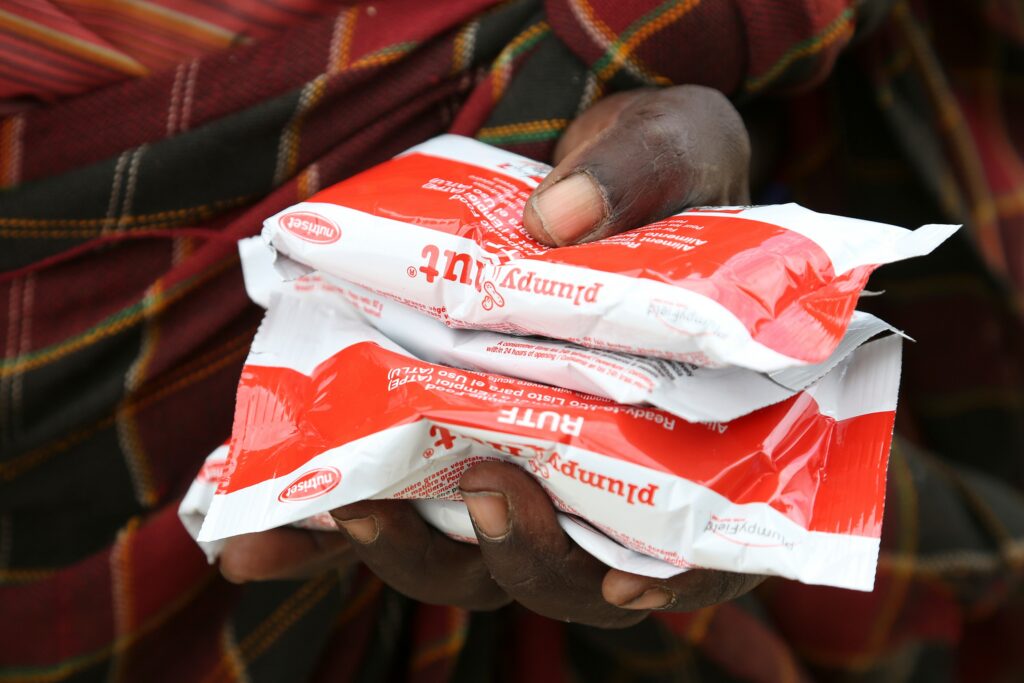
Ready-to-use therapeutic foods (RUTF) are energy-dense, micronutrient-rich foods designed for the management of severe acute malnutrition in specific contexts. They are typically shelf-stable, do not require cooking or refrigeration and are formulated to provide a high concentration of energy, protein and essential micronutrients in a small volume to support nutritional rehabilitation.

RUTFs are commonly used within structured protocols in humanitarian, community-based or clinical programmes, often where healthcare access, safe water or cooking facilities may be limited. Their design supports safe distribution and use in challenging environments, while delivering predictable nutrient intake during treatment.

Codex definition (CXG 95-2022):

Ready-to-use therapeutic foods (RUTF) are foods for special medical purposes and are high energy and contain adequate protein and other essential nutrients for the dietary management of children from 6 to 59 months with severe acute malnutrition without medical complications with appetite. These foods should be soft or crushable and should be easy for children to eat without any prior preparation.

Dietetic nutrition

Dietetic nutrition refers to foods specifically formulated for weight loss and weight control that support individuals in achieving their body weight objectives. They are developed to ensure adequate intakes, both in terms of quantity and quality, as well as in terms of their macro and micronutrient profiles. Moreover, they are easy-to-use, available in different flavours and formats making them a convenient and nutritional component to adhere to the dietary management plan and to maximise the chance of achieving dietary goals.

They are carefully formulated as either low calorie diet (LCD) products or very low calorie diet (VLCD) products. The VLCD category falls under the Food for Special Medical Purpose (FSMP) category, and medical supervision is mandatory.

Foods specifically formulated for weight loss and weight control can either replace: (i) the entirety of the diet (total diet replacement), which is the case for VLCD products or (ii) a meal (meal replacement for weight control), or (iii) part of a meal (partial meal replacement), which is often the case for LCD products.

Codex definitions:

  • Formula Foods for Use in Weight Control Diets (CXS 181-1991): Formula foods for use in weight control diets are foods which, when presented as “ready-to-serve” or when prepared in conformity with the directions for use, are presented as a replacement for all or part of the total daily diet.
  • Formula Foods for Use in Very Low Energy Diets for Weight Reduction (CXS 203-1995): Formula food for use in very low energy diets is a food specially prepared to supply a minimum amount of carbohydrates and the daily requirements of the essential nutrients in 450-800 kcal which represents the sole source of energy intake.

Sports nutrition

Sports and other physical activities may push the body to extreme conditions, resulting in very specific nutritional needs.

From elite professional athletes to dedicated amateurs, millions of people across the globe consume sport foods and drinks (also called foods for intense muscular effort) to provide the nutrients and fluids they need as they play competitive sport or are involved in other intense muscular effort.

Sport foods are specifically designed, formulated and marketed in relation to physical activity, physical performance and/or post-exercise recovery. They can also help athletes in certain circumstances tolerate heavier training to a greater degree by helping them recover faster or helping them to stay injury-free and healthy during intense training.

Sports and physical activity represent a way of life for millions of people, on a professional or amateur level and adequate nutrition for these circumstances can catalyse, increase and improve their performance.

Sport foods are not defined at Codex level.

Gluten-free foods

When a consumer is allergic to wheat or is gluten intolerant, many ‘regular’ foods become off-limits – including bread, pasta, breakfast cereals and biscuits.

Gluten intolerance, also known as coeliac disease, is an autoimmune condition that impacts millions of people globally.

Gluten-free foods meet coeliac nutritional needs and are similar in taste and texture to products containing gluten, helping followers of this diet to remain gluten-free throughout life.

Gluten-free foods act as effective and healthy substitutes for products that normally contain wheat, rye or barley and allow coeliacs to enjoy a varied and complete diet with confidence.

Codex definition (CXS 118-1979):

Gluten-free foods are dietary foods

a) consisting of or made only from one or more ingredients which do not contain wheat (i.e. all Triticum species, such as durum wheat, spelt, and khorasan wheat, which is also marketed under different trademarks such as KAMUT), rye, barley, oats (1) or their crossbred varieties, and the gluten level does not exceed 20 mg/kg in total, based on the food as sold or distributed to the consumer, and/or

b) consisting of one or more ingredients from wheat (i.e. all Triticum species, such as durum wheat, spelt, and khorasan wheat, which is also marketed under different trademarks such as KAMUT), rye, barley, oats (1) or their crossbred varieties, which have been specially processed to remove gluten, and the gluten level does not exceed 20 mg/kg in total, based on the food as
sold or distributed to the consumer.

(1) Oats can be tolerated by most but not all people who are intolerant to gluten. Therefore, the allowance of oats that are not contaminated with wheat, rye or barley in foods covered by this standard may be determined at the national level.

Read the ISDI brochure