
 Log In

Recognising the specific nature of special dietary foods
Special dietary foods are subject to stricter compositional, safety and labelling requirements than foods for the general population. Their nutritional profiles are designed to meet specific dietary needs arising from particular physiological conditions, diseases or life stages, and are based on recognised scientific recommendations.
Front-of-Pack Nutrition Labelling (FOPNL) schemes developed for the general adult population are not appropriate for special dietary foods, including foods for infants and young children and FSMPs. Applying such schemes to these products risks misleading consumers and undermining informed dietary choices adapted to their specific needs.
In line with the Codex Guidelines on Nutrition Labelling (CXG 2-1985), key categories of special dietary foods should be excluded from FOPNL, including:
- Infant formula, follow-up formula and growing-up milks
- Foods for infants and young children
- Foods for special medical purposes
- Formula foods for weight control diets
A proportionate, risk-based approach should be applied whenever nutrient profiles or supplementary nutrition labelling are discussed for FSDU.

Claims within the Codex framework
At Codex level, claims are defined broadly as any representation that states, suggests or implies that a food has particular qualities relating to its composition, nutritional properties or other characteristics. Unlike general foods, claims for special dietary foods can be voluntary or mandatory, reflecting the need to explain the specific role and purpose of these products.
The Codex framework governing claims includes:
- The General Standard for the Labelling of Prepackaged Foods (CXS 1-1985)
- The General Guidelines on Claims (CXG 1-1979)
- The Guidelines for Use of Nutrition and Health Claims (CXG 23-1997)
- Specific standards for FSDU and FSMP, including CXS 146-1985 and CXS 180-1991
These texts must always be read together, not in isolation.
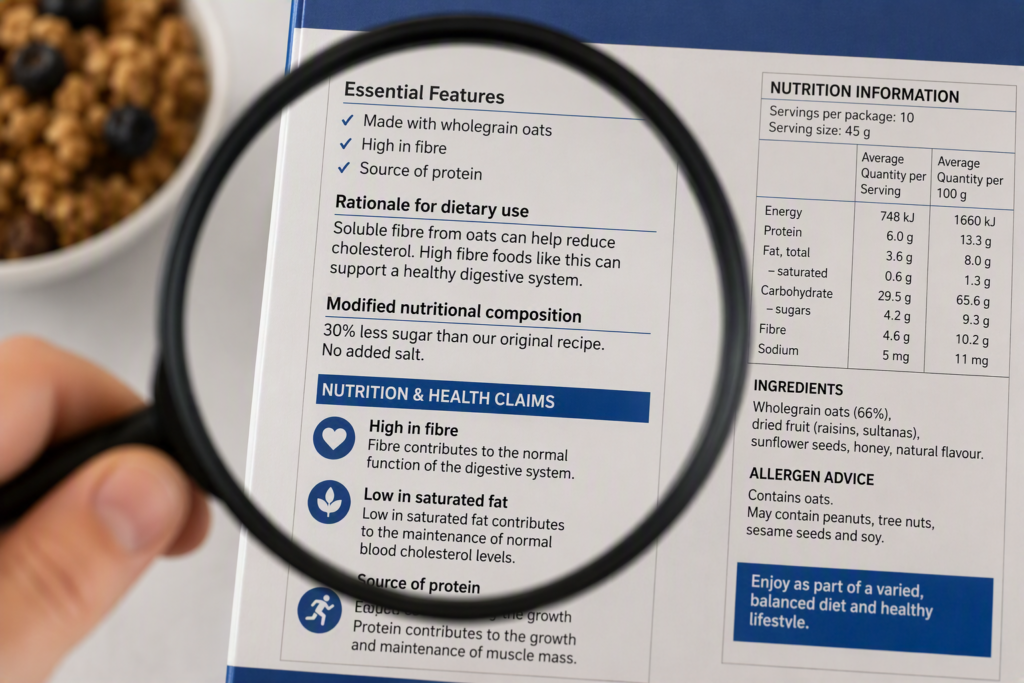
Distinguishing voluntary claims from mandatory information
For special dietary foods, certain statements that may resemble nutrition or health claims are mandatory labelling elements, such as:
- The characterising essential feature of the product
- The rationale for its dietary use
- Information on modified nutrient composition
While these statements may be phrased similarly to voluntary claims used on general food, they serve a different purpose: to ensure safe and appropriate use by the intended population.
It is important to clearly distinguish between:
- Voluntary nutrition and health claims, which must meet the conditions set out in Codex guidelines, and
- Mandatory information, which is required to characterise special dietary foods and explain their nutritional role.

Claims for infants, young children and medical nutrition
The Codex Alimentarius framework provides specific rules for claims relating to foods for infants and young children, recognising their vulnerability and unique nutritional needs. Nutrition and health claims are generally restricted, unless explicitly permitted by relevant Codex standards or national legislation.
For Foods for Special Medical Purposes, claims related to the prevention, treatment or cure of disease are prohibited. However, mandatory statements explaining the product’s dietary management role and nutritional characteristics are essential and required under Codex.

Labelling and claims must remain science-based, accurate and non-misleading
ISDI continues to engage with international and national authorities to promote coherent, proportionate and effective labelling and claims policies for foods for special dietary uses:
- Labelling and claims must remain science-based, accurate and non-misleading
- The specific nature and purpose of FSDU must be fully recognised in regulatory frameworks
- International alignment with Codex Alimentarius is essential to avoid consumer confusion and barriers to trade
- Appropriate use of claims and mandatory information supports innovation, consumer understanding and public health objectives