Archives

ISDI to work on a new ISO standard to address malnutrition in healthcare facilities
Published: September 18, 2025 pm30 12:51 pm

Author:

Categories: News

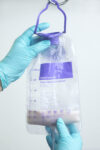
ISDI is supporting work on a new ISO standard for Malnutrition Prevention, Detection and Treatment, which will serve as a blueprint for the effective treatment of malnutrition in healthcare facilities worldwide.

The new work received overwhelming support from the members of the ISO Technical Committee 34 ‘Food products’ (TC34) and will be the first ever international standard in the area of malnutrition care.

Malnutrition in hospitals is a critical and global clinical issue that affects up to 50% of in-patients around the world1. Malnourished patients have an increased length of stay, are more frequently readmitted and are at greater risk of complications and mortality. Some countries have taken varied and partial approaches to malnutrition care, but it is often overlooked as a clinical issue.

ISDI Vice-President, Xavier Lavigne, who is also the Convenor of a new Malnutrition Working Group within TC34, said: “Malnutrition care in hospitals is too often inadequate with considerable cost to both patients and healthcare systems. This international standard to address malnutrition across the continuum of patient care offers an opportunity to harmonise practices globally and embed malnutrition treatment as a routine part of healthcare delivery.”

Work on the new standard, which is based on a Standards Council of Canada standard (CAN/HSO 5066:2021), will begin in October 2025. It is expected to be completed within three years, after which the committee members will vote on the adoption of the standard. National mirror committees will be set up in more than 15 countries to support the work.

Prospective validation of the Global Leadership Initiative on Malnutrition criteria for identifying malnutrition in hospitals: A protocol and feasibility pilot study.


https://aspenjournals.onlinelibrary.wiley.com/doi/10.1002/ncp.11156

ISDI statement in response to UNICEF’s 2025 Child Nutrition Report – ‘Feeding Profit: How food environments are failing children’

Published: September 11, 2025 pm30 12:48 pm

Author:

Categories: News

UNICEF’s 2025 Child Nutrition Report, published on 10 September 2025, raises important questions about the prevalence of malnutrition, particularly overweight and obesity, and the importance of food environments that provide nutritious and healthy foods.

Early childhood is a critical time for the growth and development of a child. The importance of adequate and age-appropriate nutrition during this time cannot be overstated. Breastfeeding, formula feeding, mixed feeding, home prepared food, manufactured baby food and nutritional supplementation form the nutritional basis to achieve optimal growth and development during this period. They are also the nutritional tools to avert the burden of malnutrition.

Whilst the report rightly highlights the need to address malnutrition with actions across the food, health, water and sanitation, education and social protection systems, it is wrong to include ‘commercially produced complementary foods’ in its definition of ‘ultra-processed foods and beverages’ and to falsely implicate these foods as a driver of overweight and obesity. The marketing of formula milks and complementary foods is also wrongly characterised as undermining breastfeeding and complementary feeding practices.

  • Complementary foods are foods for special dietary uses (FSDU), which are defined by Codex Alimentarius as ‘specially processed or formulated to satisfy particular dietary requirements’. The term ‘ultra-processed’ is not internationally defined, lacks a scientific basis and is not a valid basis for categorising foods.
  • Associating this term with the healthiness of foods is misleading and potentially harmful, especially as commercially produced complementary foods can play an important role in addressing nutrient deficiencies that are common when a child transitions to a family diet.
  • Manufacturers are an important source of scientific and factual information about their products, which helps parents and caregivers make informed decisions about the most suitable nutritional options for their infants and young children.

ISDI and its members fully support the work of Codex Alimentarius to develop a new standard for foods for older infants and young children. This standard will be an important tool for improving the quality and safety of complementary foods worldwide.

Furthermore, our industry is wholly committed to marketing its products responsibly in full compliance with all applicable laws and regulations, with consideration for the realities of parents’ lives and the need for science-based infant feeding support free from pressure or judgment.

ISDI remains committed to constructive dialogue on improving infant and young child nutrition and addressing malnutrition within all appropriate fora and with all stakeholders. We reserve further comment until we have had the opportunity to fully evaluate the report.

New one-stop-shop Test Methods website provides a comprehensive and authoritative guide to analytical methods for special dietary foods

Published: July 1, 2025 pm31 12:41 pm

Author:

Categories: News

Ensuring the safety and nutritional quality of special dietary foods requires the use of accurate and precise test methods. The new ISDI website – Test Methods for Special Dietary Foods – provides a comprehensive guide to the most suitable analytical methods for determining nutrients in special dietary foods.

This new platform is designed to help improve food safety and quality, as well as promote harmonised testing globally, by assisting authorities, laboratories and industry professionals to identify the most reliable and internationally recognised test methods. It serves as an up-to-date reference reflecting the global consensus on methods of analysis for special dietary foods.

Jean Christophe Kremer, ISDI Secretary General, said: “This website meets a clear need, which is for anyone working with special dietary foods to be able to find reliable and validated analytical methods.

Using methods that aren’t fit for purpose can cause serious problems, for example for manufacturers and regulators. This website will help mitigate those risks by facilitating easy access to the best, most up-to-date analytical methods. By developing such a website, our industry is committing to improving food safety and quality, innovation and global regulatory harmony.”

“Standards are only as good as their implementation and methods of analysis”

The website was presented at the at the ISDI webinar on ‘Methods of analysis for special dietary foods: How science ensures food safety and quality for people with special dietary needs’ on 10 June 2025. During the webinar, Secretary of the Codex Alimentarius Commission, Sarah Cahill, spoke about the importance of internationally agreed methods that ensure food safety and to facilitate trade in safe foods.

She said: “Standards are only as good as their implementation and methods of analysis. Without such methods we would have no idea whether a commodity was meeting provisions that had been established to ensure the food was safe, or meet the quality parameters or nutritional requirements.

“This new one-stop shop website for methods of analysis for foods for special dietary uses is very complementary to Codex efforts and in line with efforts to increase the recognition and use of Codex Standards.

Background

Test Methods for Special Dietary Foods was developed by ISDI with the support of AOAC International and the International Dairy Federation to advance regulatory compliance and scientific excellence.

It currently covers final methods for analysing nutrients in infant formula and follow-up formula. Future updates of the site will expand it to cover other categories of special dietary foods, as well as contaminants. The site provides all the relevant information about the methods, including how they relate to Codex Alimentarius standards, acting as a central reference point with direct links to access methods from the method development organisations.

Visit Test Methods for Special Dietary Foods here.