Archives

ISDI supports World Diabetes Day!

Published: November 13, 2019 pm30 5:33 pm

Author:

Categories: News

For hospitalised patients with diabetes, poor glucose control leads to adverse health outcomes while good control improves patients’ outcomes and cuts the cost of care. Based on the evidence of clinical, health and economic outcomes, the International Special Dietary Food Industries (ISDI) endorses the use of diabetes-specific formulas (DSF) to help achieve and maintain glycaemic control, improve recovery, and reduce the cost of care.

ISDI considers it essential to share this endorsement on the occasion of World Diabetes Day 2019, and to recall the publication of its position statement.

Poor glycaemic control is common in hospitalised patients and predisposes them to:

  • Increased risk of perioperative infection
  • Increased length of stay
  • Greater risk of mortality

The American Diabetes Association has defined two key goals for nutrition therapy of hospitalised patients: to optimise glycaemic control and provide adequate nutrients to meet metabolic demands. DSFs are a category of foods for special medical purposes designed to meet these objectives by not only supporting the metabolic nutritional requirements of a standard formula, but also minimising glycaemic response. DSFs are also endorsed by the European Society for Clinical Nutrition and Metabolism (ESPEN) for the nutritional support of people with obesity and diabetes.

Clinical evidence further validates the use of DSFs to improve patient outcomes and
cut the cost of care by:

  • Improving glucose levels and reducing glycaemic variability
  • Reducing the risk of hypoglycaemia, and blunting the hyperglycaemia of stressrelated metabolism
  • Reducing insulin requirements
  • Reducing length of stay, which leads to a reduction in total cost

Therefore, ISDI endorses the use of DSFs as a safe, efficacious and cost-effective strategy to support the management of hospitalised patients with, or at risk of, poor glucose control.
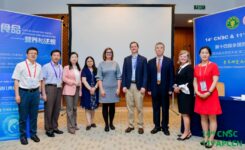

ISDI Represented at CNSC & APCCN in Nanjing

Published: November 12, 2019 pm30 5:28 pm

Author:

Categories: News

From 19-22 September 2019, Paul Hanlon and Cris Bradley represented ISDI at the 14th China Nutrition Science Congress and 11th Asia Pacific Conference on Clinical Nutrition in Nanjing, China, taking part in the symposium ‘Forum on Infant Food – Nutrition and Regulation’.

Their presentations on ‘Safety Assessment of Infant Formula Additives’ (Dr Hanlon) and ‘Safe Use of Additives in Infant Foods: What, Why and How they are Used’ (Ms Bradley) provided a complementary and cohesive perspective on the industry’s collaborative work in this challenging area, and were very well received by the audience.

The symposium, which was well-attended by a greatly interested audience, also featured high-profile presentations on China’s regulations on older infant and young child formula, human milk research and outcomes, and infant allergies and brain development.

ISDI supports the first World Food Safety Day!

Published: June 7, 2019 pm30 5:21 pm

Author:

Categories: News

The first ever World Food Safety Day (WFSD) will be celebrated on 7 June 2019 to draw attention and inspire action to help prevent, detect and manage foodborne risks, contributing to food security, human health, economic prosperity, agriculture, market access, tourism and sustainable development. (FAO and WHO, 2019)

For this inaugural World Food Safety Day, ISDI joins other stakeholders involved in safe food production, manufacturing operations, and education initiatives to raise global awareness about food safety and its vital role in protecting human health and wellness.

Safe food allows for suitable uptake of nutrients and promotes long-term human development. Safe food production improves sustainability by enabling market access and productivity, which drives economic development and poverty alleviation, especially in rural areas. (FAO and WHO, 2019)

For more than a century, the special dietary foods sector has supported science-based nutrition and dietary management options for consumers requiring Foods for Special Dietary Uses (FSDU). FSDU are expressly formulated to address unique nutritional requirements due to specific diseases or disorders, or particular physiological conditions – from maternal nutrition, to infant and young children formulas, paediatric and adult meal replacements, and foods for gluten intolerance. ISDI members take great pride in producing tailored formulations based on the latest available scientific information, accredited food production and manufacturing operations and other global food safety management systems.

The Codex Alimentarius Commission, managed by FAO and WHO, establishes science-based food standards, guidelines and codes of practice that ensure food safety and quality by addressing contaminants, hygienic practices, labelling, additives, inspection and certification, nutrition and residues of veterinary drugs and pesticides. When governments adopt international standards, farmers and producers are able to meet consumer demands for safe food at the same time gaining access to the global food market. (FAO and WHO, 2019)

ISDI is committed to helping its members understand the challenges being faced in food safety, and to facilitating collaborations and a global platform that can enable an inspired food safety mind-set, sharing of best practices, and harmonized food safety solutions for our sector. We, as representatives of the special dietary foods sector, are enthused and proud to support the World Food Safety Day 2019.

ISDI Press Statement Celebrating International Coeliac Day!

Published: May 16, 2019 pm31 4:58 pm

Author:

Categories: News

ISDI is pleased to celebrate International Coeliac Day today, and the anniversary of the release of its brochure on gluten-free labelling.

ISDI represents manufacturers of gluten-free foods specifically formulated for people with coeliac disease and welcomes the International Coeliac Day.

Coeliac disease is a global disease and occurs in about 1% of people in most populations. Diagnosis rates are increasing and the prevalence of coeliac disease varies with sex, age and geographical location.

Gluten intolerance, also known as coeliac disease, can only be treated through the lifelong exclusion of gluten. Gluten-free foods are specially designed to exclude gluten for consumers who are gluten intolerant.

To preserve the specific composition of these foods and ensure appropriate information to consumers, the Codex Alimentarius has revised in 2015 its Standard for Foods for Special Dietary Use for Persons Intolerant to Gluten (CODEX STAN 118-1979).

President of ISDI, Venetta Miranda: “Gluten-free manufacturers across the globe are proud to contribute to improving the lives of people with coeliac disease. The guidance document on gluten-free labelling will help ensure that food business operators across the world understand the good manufacturing practices and labelling requirements for gluten-free foods, so that coeliac sufferers can continue to trust the foods which are essential to the management of their condition.